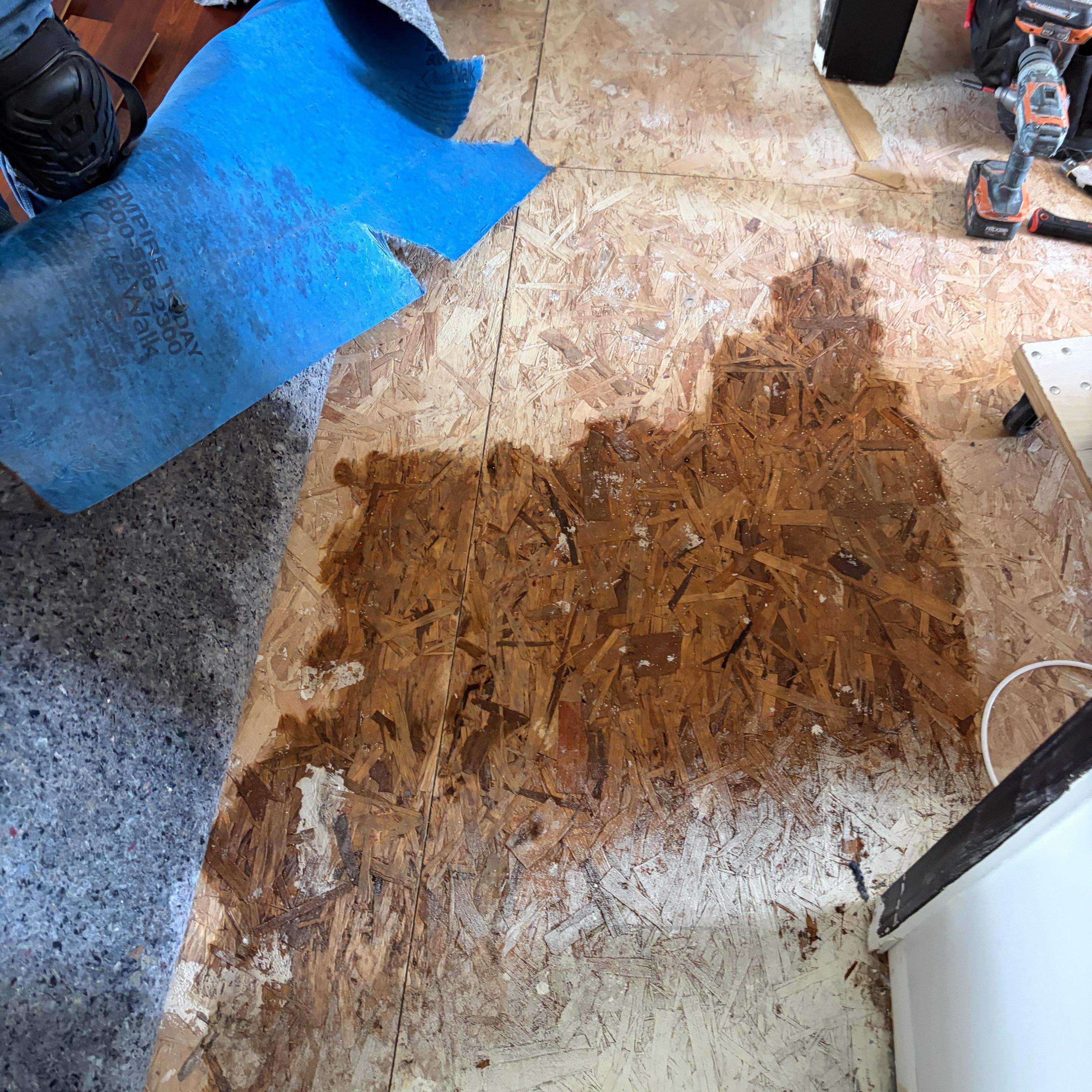
Quick Answer: Subfloor Repair Cost and Timeline
Subfloor water damage repair in Windermere typically runs $500 to $7,500 depending on the affected square footage, water category, and whether joists are involved. Detection-only inspections with moisture mapping range from $0 (during a full restoration job) to around $350 standalone. Most projects complete in 3 to 10 days when caught early.
Cost Snapshot
| Scope of Damage | Typical Windermere Cost | Timeline |
|---|---|---|
| Surface drying, no replacement | $500 to $1,500 | 3 to 4 days |
| Partial subfloor cut-out (under 50 sq ft) | $1,200 to $3,000 | 4 to 6 days |
| Full room subfloor replacement | $2,800 to $5,500 | 5 to 8 days |
| Subfloor plus joist repair | $4,500 to $7,500+ | 7 to 12 days |
| Category 3 (sewage) contamination | Add $1,000 to $2,500 | Add 1 to 3 days |
Signs Your Subfloor Is Already Damaged
Most Windermere homeowners notice symptoms before they ever see water. Walk your home and check for these red flags:
- Soft, spongy, or bouncy spots when you step
- Cupping, crowning, or buckling of hardwood planks
- Tile grout lines cracking in a straight line
- Vinyl or laminate lifting at the seams
- Squeaks or pops that are new within the last 60 days
- Visible sag or dip near toilets, tubs, dishwashers, or refrigerators
- Musty odor strongest at floor level
- Dark staining bleeding through the finish floor
- Nail pops on the surface above
If you see two or more of these in the same area, assume the subfloor is involved until proven otherwise. Hidden moisture frequently travels several feet from the original leak point, which is why finding the hidden source matters as much as drying the visible damage.
High-Risk Locations to Inspect First
Certain areas of Windermere homes account for the majority of subfloor failures Windermere Water Restoration encounters. Prioritize inspection at these spots:
- Under and behind toilets, where wax ring failures leak for months unnoticed
- Around dishwasher feet and the cabinet kickplate below
- Beneath refrigerator ice maker lines, especially behind older push-in valves
- At the base of tub and shower surrounds where grout has failed
- Around washing machine drain pans and supply hose connections
- Near exterior door thresholds in mudrooms and patio entries
When Insurance Covers Subfloor Repair
Most homeowner policies in Windermere cover sudden and accidental water damage to subflooring. Coverage usually applies when:
- The source was sudden (burst pipe, appliance failure, ice dam)
- You acted reasonably fast to mitigate
- Damage is documented with moisture readings and photos
- The leak is not from long-term seepage or lack of maintenance
What is typically not covered: groundwater intrusion, slow leaks under sinks left for months, and flood (which requires separate NFIP coverage).
How to Strengthen Your Claim
Adjusters approve scope faster when the file is tight. Before Windermere Water Restoration arrives, take wide and close-up photos of every affected room, save any receipts for emergency supplies, and write a short timeline of when you first noticed the issue. Do not throw away wet materials until the adjuster has seen them or approved disposal in writing. Ask your contractor for daily drying logs and a final moisture clearance report, both of which are standard on every Windermere Water Restoration project and often the deciding factor between a partial and a full payout.
The Repair Process Step by Step
Once we confirm scope, a typical Windermere subfloor project runs like this:
- Containment with poly sheeting and HEPA air scrubbers
- Remove finish flooring above the affected area
- Cut and remove damaged plywood or OSB to the nearest joist
- Inspect and treat joists (sister or replace if rot is structural)
- Apply antimicrobial to remaining framing
- Set air movers and dehumidifiers, monitor for 3 to 5 days
- Install new tongue-and-groove subfloor sheathing
- Reinstall or replace finish flooring
How Professionals Detect Subfloor Damage
A proper inspection in Windermere should never be guesswork. Here is what a qualified IICRC technician brings to your home:
- Pin and pinless moisture meters to map wet zones without tearing up the floor
- Thermal imaging cameras to spot temperature differentials from trapped moisture
- Borescope inspection through small access holes near baseboards
- Hygrometer readings to compare ambient versus material moisture content
- Visual joist inspection from basement or crawl space below
Dry subfloor reads under 16% moisture content. Anything above 20% is actively wet and will rot or grow mold within days. We document every reading so insurance has no room to push back on scope. A thorough Windermere Water Restoration inspection in an average single-family home takes 45 to 90 minutes and produces a moisture map, photo log, and written scope you can hand directly to your adjuster.
IICRC Water Categories and Why They Matter
The category of water that hit your subfloor decides whether it can be dried in place or must be removed entirely:
- Category 1 (clean water): Supply line break, refrigerator line, sink overflow. Subfloor can often be dried in place if caught within 24 to 48 hours.
- Category 2 (grey water): Dishwasher, washing machine, aquarium. Surface layers may dry, but porous OSB usually needs removal.
- Category 3 (black water): Toilet overflow with solids, sewage backup, flood water. Subfloor must be removed and replaced. No exceptions. See our Category 3 cleanup guide for the full protocol.
Keep in mind that water category can change with time. A Category 1 supply line break that sits for 72 hours often degrades to Category 2 once it has soaked into cabinet bases, drywall, and bacteria-friendly OSB. That is one more reason fast response saves both the floor and the budget.
What Drives Cost Up or Down
- Square footage affected and accessibility (kitchens cost more than closets)
- Type of subfloor: plywood is cheaper than OSB to source, tongue-and-groove premium adds 15 to 20%
- Joist involvement and crawl space versus slab access
- Finish flooring on top (tile removal alone can add $800 to $2,000)
- Water category and whether mold has started
- Insurance involvement and documentation requirements
For broader pricing context across the full restoration scope, our complete water damage cost breakdown covers extraction, drying, and finish work line by line.